

When compared to homeowners in many other states, Florida residents deal with a distinct insurance situation. High winds, flooding, extreme rains, hurricanes, tropical storms, and growing reconstruction expenses can all affect a home’s insurance policy and potential cost.
Your house, personal items, and financial interests are all protected from insured losses by Florida homeowners insurance. However, it takes more than just glancing at the annual premium to comprehend the policy. When filing a claim, the deductible, exclusions, roof condition, wind protection, coverage limitations, and valuation method can all have a significant impact.
Your insurance should accurately represent the risks associated with your house, regardless of whether you own an upscale property far from the coast, an older home in Central Florida, or a seaside property in South Florida.
This article describes what is covered by Florida home insurance, what is typically excluded, how policies A through F operate, why premiums fluctuate, and how you may reduce the cost of your policy.
What Is Florida Homeowners Insurance?
A homeowner is protected against certain insured losses by homeowners insurance, which is the same as property and liability coverage. According to Florida’s Department of Financial Services, following a covered catastrophe, homeowners insurance can assist with the cost of building or repairing a house as well as replacing any stolen or destroyed personal belongings.
Property protection and individual liability coverage are typically combined in a policy.
Depending on the policy, it may protect:
- The home itself
- Detached structures
- Furniture and personal belongings
- Certain household equipment
- Additional living expenses after a covered loss
- Personal liability
- Medical payments to others
As a requirement of the loan, your mortgage lender could additionally demand homeowners insurance.
When reviewing coverage alternatives, Allied Insurance Group offers Florida house insurance that is tailored to the needs of the customer and the property.
Why Is Homeowners Insurance Different in Florida?
Due to Florida’s location, property insurance is very crucial.
While homes in other locations may still be subject to tropical storms, tornadoes, lightning, severe rainfall, and floods, homes close to the Atlantic or Gulf Coast may be more vulnerable to wind and hurricanes.
The expense of reconstruction following significant disasters has an impact on the state’s insurance market. Insurance costs may be impacted by development labor, materials, roofing work, property values, catastrophic losses, and reinsurance requirements.
Florida homeowners therefore need to consider more than the standard question, “How much does home insurance cost?”
The better question is:
Does my policy provide appropriate protection for the risks my home actually faces?
What Does Florida Homeowners Insurance Cover?
The exact coverage depends on your policy, endorsements, limits, deductibles, and exclusions. However, standard homeowners policies generally organize protection into several familiar coverage categories.
Coverage A — Dwelling
Coverage A applies to the main structure of your home.
It can include the physical components of the dwelling, such as walls, roof, permanently installed fixtures, and other insured structural elements when damaged by a covered cause of loss.
Your dwelling limit should reflect the estimated cost to rebuild the home rather than simply its market value or purchase price.
Coverage B — Other Structures
Coverage B generally applies to structures on your property that are separate from the main dwelling.
Examples can include:
- Detached garages
- Sheds
- Certain fences
- Gazebos
- Other qualifying structures
The amount of coverage depends on the policy.
Coverage C — Personal Property
Coverage C protects eligible personal belongings against covered losses.
This can include:
- Furniture
- Clothing
- Electronics
- Appliances
- Household items
- Certain valuables
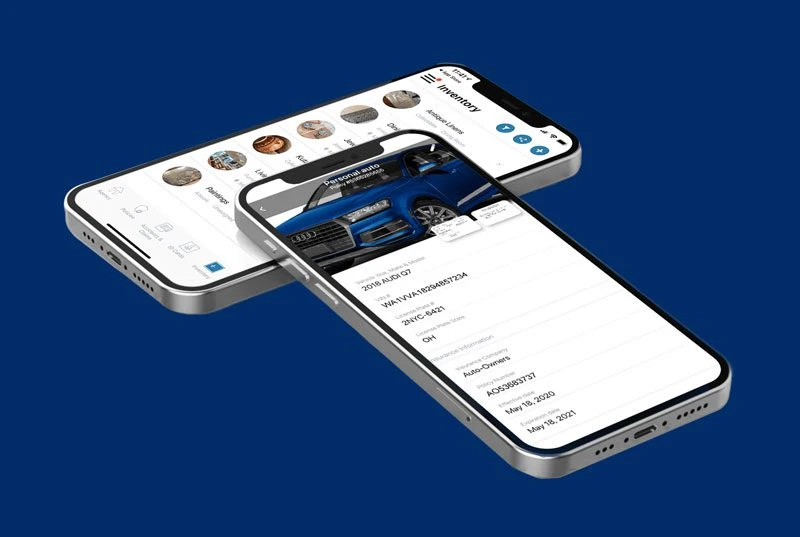
Creating a home inventory can make it easier to document what you own and estimate whether your current personal-property limit is sufficient.
Coverage D — Loss of Use
If a covered loss makes your home temporarily unlivable, Coverage D may help with additional living expenses, subject to the policy’s terms and limits.
For example, if a major covered fire requires you to temporarily stay elsewhere while repairs are completed, eligible additional expenses may be covered.
Coverage E — Personal Liability
Coverage E protects against certain claims when you are legally responsible for bodily injury or property damage to another person.
This can become particularly important when a homeowner has significant assets or frequent visitors.
For homeowners who need additional liability protection beyond their underlying policies, Personal Umbrella Insurance can provide an additional layer of liability coverage.
Coverage F — Medical Payments to Others
Coverage F can provide limited medical payments for certain injuries to other people, subject to the policy terms and limits.
It is different from personal liability coverage because it does not generally require the same determination of legal responsibility.
What Does Homeowners Insurance Not Cover?
One of the biggest misconceptions about Florida home insurance is that it covers every type of property damage.
Common exclusions or limitations can include:
- Flood damage
- Storm surge
- Normal wear and tear
- Poor maintenance
- Certain earth movement
- Termite damage
- Certain mold-related losses
- Intentional damage
- Losses above policy limits
- Certain sewer or drain-related losses unless appropriate coverage is included
The cause of damage is often just as important as the damage itself.
For example, a sudden plumbing failure may be treated differently from water that gradually enters a home because of long-term maintenance problems. Always review the policy wording and endorsements rather than assuming a particular loss is covered.
Does Florida Homeowners Insurance Cover Flood and Water Damage?
Water damage and flooding are two different things.
Rising water from sources like overflowing bodies of water or storm surge often needs separate flood protection because the majority of homeowner’s insurance does not cover flood damage. The majority of homeowner’s policies do not cover flood damage, according to Florida’s consumer guidelines.
Based on the policy and situation, water from a broken pipe, appliance failure, or certain unexpected plumbing incidents may be handled differently.
For many households, including those who do not reside in a designated high-risk flood zone, this differential makes Florida Flood Insurance a crucial factor.
Before buying coverage, ask how the policy handles:
- Burst pipes
- Appliance leaks
- Roof leaks
- Sewer backups
- Gradual water damage
- Flooding
- Storm surge
Why Are Florida Homeowners Insurance Rates So High?
The cost of homeowners insurance in Florida is determined by a variety of factors.
The location of the property, the quantity of dwelling coverage, the features of fire protection, the structure, the history of claims, the exposure to hurricanes, and other underwriting considerations can all affect rates. Location, dwelling coverage, and fire protection class are among the variables considered to determine a property insurance rating, according to Florida’s Department of Financial Services.
Rebuilding costs and disaster losses may also have an impact on the overall market.
Homeowners should not, however, assume that the percentage increase in each insurance would be the same. Your property, insurer, coverage, area, and current underwriting circumstances all affect the cost of your renewal.
For instance, Citizens Property Insurance stated that, although actual adjustments varied by product and region, their 2026 allowed revisions led to an average statewide drop of 8.8% for homeowner multiple-policy procedures and an average of 5.1% for resident wind-only approaches.
That illustrates why homeowners should evaluate their own renewal rather than relying on a statewide average.
What Is Citizens Property Insurance?
Citizens Property Insurance Corporation is Florida’s state-created insurer of last resort. It provides coverage to eligible Florida property owners who cannot obtain appropriate coverage in the private market under applicable requirements.
Citizens can play an important role in Florida’s property insurance system, but homeowners should not automatically assume that Citizens is the cheapest or best option.
Compare:
- Coverage limits
- Deductibles
- Exclusions
- Wind coverage
- Flood requirements
- Policy conditions
- Premium
- Eligibility
The goal should be finding appropriate protection rather than simply selecting the lowest number on a quote.
How Old Can a Roof Be for Florida Homeowners Insurance?
Roof age has become an important underwriting consideration in Florida.
Insurance companies may look at:
- Roof age
- Roof material
- Roof condition
- Installation records
- Remaining useful life
- Previous repairs
- Inspection results
- Building characteristics
There isn’t a single optimum roof age that works for all Florida homes and insurers. Guidelines for carriers might vary.
Keep copies of permits, invoices, inspection reports, photos, and repair documents if your roof is older. An insurer can learn more about the property’s history and condition with the use of quality paperwork.
Before supposing that a roof repair would automatically result in a particular premium decrease, you should also discuss it with your insurance agent.
Can Wind Mitigation Lower Homeowners Insurance Costs?
Florida homeowners may be eligible for insurance discounts based on qualifying hurricane-loss mitigation features.
These can include measures such as:
- Hurricane shutters
- Impact-resistant windows
- Reinforced doors
- Certain roof-to-wall connections
- Improved roof construction
- Secondary water resistance
According to Florida’s Financial Services, mitigation upgrades can lower insurance premiums and shield belongings from hurricane-force winds.
The insurer, the property, the documents, and any relevant criteria all influence how much of a discount is given. Documenting relevant elements might be aided by a wind mitigation examination.
What Is a Four-Point Inspection?
A four-point inspection typically evaluates four major components of an older home:
- Roof
- Electrical system
- Plumbing
- HVAC system
An insurer may request inspection information when evaluating an older property, although requirements differ between carriers.
The inspection can help identify aging systems that may affect underwriting.
A homeowner should not assume that completing a four-point inspection guarantees coverage or a lower premium. It is simply one piece of information an insurer may use when evaluating the property.
How Do Hurricane Deductibles Work in Florida?
A hurricane deductible may be a very different amount from your basic deductible under your policy. Florida law gives rules as to when a hurricane deductible applies.
The Florida Department of Financial Services says that hurricane coverage protects from some windstorm damages during a hurricane, but not from flooding. Florida insurers must provide a hurricane deductible option of $500, 2%, 5% or 10%, based on what is required by the statute. The deductible to apply should be included with the policy declarations. If, for instance, a dwelling limit of $400,000 is in effect on a home and there’s a 2% hurricane deductible, then the deductible is $8,000.
That’s why homeowners need to know what the dollar amount of a percentage deductible is before selecting a policy.
Replacement Cost vs. Actual Cash Value
These two valuation methods can produce very different claim outcomes.
- Replacement cost generally focuses on the amount needed to repair or replace covered property without subtracting depreciation, subject to the policy’s terms and limits.
- Actual cash value (ACV) generally accounts for depreciation.
For example, imagine a five-year-old television is damaged in a covered loss. An ACV settlement may account for the television’s age and depreciation, while replacement-cost coverage may provide the amount necessary to replace it with a comparable item, subject to the policy’s requirements.
Allied also explains the distinction between actual cash value and replacement cost in its homeowners insurance FAQs.
Real Florida Homeowner Examples
Example 1: A Coastal Home
Imagine a homeowner in the Fort Lauderdale area who has impact-resistant windows, a modern roof, and proven wind mitigation systems.
Although the homeowner may be better protected against some wind hazards, storm surge and flood are still different issues. Thus, it is crucial to examine the hurricane premium and flood coverage separately.
Example 2: An Older Florida Home
Consider a homeowner whose house is thirty years old and has deteriorating plumbing and electrical systems.
The insurer may ask for inspection data before renewal. By maintaining repair records and recording house improvements, the homeowner can facilitate the process.
Example 3: A Newer Inland Property
Despite having less exposure to the shore, an inland homeowner is nonetheless at risk for theft, water damage, wind, lightning, extreme storms, and liability.
Instead of presuming that being inland implies insurance worries are negligible, the homeowner should nevertheless check dwelling limitations, personal-property coverage, deductibles, and exclusions.
These are not summaries of particular Allied customer claims; rather, they are indicative instances.
How Can You Lower Your Florida Homeowners Insurance Premium?
Reducing your premium does not mean removing coverage you may need.
Instead, consider practical steps such as:
- Ask about available wind mitigation discounts.
- Maintain your roof and major home systems.
- Keep inspection and improvement records.
- Install qualifying security or fire protection systems.
- Review your deductible carefully.
- Ask whether bundling policies can reduce costs.
- Keep dwelling coverage aligned with rebuilding needs.
- Review personal-property limits after major purchases.
- Compare coverage from multiple insurers.
- Request a policy review before renewal.
Allied notes that homeowners can potentially lower costs through available discounts, policy reviews, security measures, and deductible choices, while emphasizing the importance of comparing quotes with equivalent coverage.
If you also insure vehicles, reviewing Auto Insurance alongside your home policy may help you identify opportunities for coordinated coverage.
Why Choose an Independent Insurance Agency?
Insurance pricing and underwriting can vary significantly between carriers.
An independent agency can compare options from multiple insurance companies rather than limiting the homeowner to one insurer.
That can be especially valuable in Florida, where property underwriting can change based on:
- Location
- Roof age
- Construction
- Wind exposure
- Claims history
- Property characteristics
- Carrier appetite
Allied Insurance Group describes itself as an independent Florida agency that works with a range of insurance companies and products.
The benefit is not simply getting “more quotes.” It is having someone help compare the actual coverage behind those quotes.
Why Choose Allied Insurance Group?
Allied Insurance Group serves Florida homeowners and offers a range of personal insurance products, including homeowners, flood, umbrella, life, renters, and other coverage options.
The agency’s website states that its process includes comparing carriers and helping customers select a coverage package that fits their needs.
For homeowners, that approach can be useful when a policy involves multiple Florida-specific considerations.
You can review Allied’s Florida insurance services or learn more about Allied Insurance Group before requesting a policy review.
Frequently Asked Questions About Florida Homeowners Insurance
What are the advantages of owning a home in Florida?
Insurance coverage that covers a residence and some personal property and the homeowner’s liability for covered losses under the policy terms, limits, deductibles and exclusions.
What is the average price of homeowners insurance in Florida?
Not all homeowners will have the same cost. The premium can be influenced by location, dwelling value, construction, roof, claims history, deductible, coverage and insurer underwriting.
What are the reasons the homeowners insurance is so high in Florida?
Premiums can be affected by hurricane exposure, catastrophe losses, rebuilding costs, reinsurance conditions, property characteristics and insurer underwriting decisions.
In Florida, will homeowners insurance cover hurricanes?
Wind coverage for a hurricane may be provided, and a hurricane deductible is likely to be different from the regular deductible. Generally, flood and storm surge are not covered as hurricane winds.
Is homeowners insurance coverage for flood damage?
The standard homeowner’s insurance policy has a clause that says that flood damage is not covered. Flood insurance may be required.
How does a hurricane deductible work?
Before the insurance company pays, it is the homeowner’s responsibility to pay the specified deductible under the policy and as required by the applicable rules in Florida.
What is the maximum age of roofs for Florida homeowners insurance?
Every insurance company doesn’t have a set age where the roof can no longer be insured. Conditions, roof type, underwriting guidelines, and carrier make and model may affect the requirements.
What is meant by four point inspection?
This is a routine check-up usually of the roof, electrical, plumbing, and heating, ventilation, and air conditioning systems, especially in older homes. 1
Will wind mitigation lower my insurance expense?
Depending on the insurer, homeowners can get premium discounts for their home if they have qualifying mitigation features for the home, based on the features documented.
Will homeowners insurance cover water damage?
A few sudden and accidental water losses may be covered, and some losses due to flood, deterioration over time, and some other water losses might be restricted or denied.
What ways can I reduce my Florida homeowners insurance cost?
Inquire about a mitigation discount, keep the property in good repair, review deductibles, shop around for insurance companies, list home improvements, and review coverage annually.
When seeking insurance coverage, is it better to go with an independent insurance agency?
An independent agency is able to shop around for insurance quotes from various carriers and assist in analyzing coverage, deductibles, exclusions and rates.
Protect Your Florida Home With the Right Coverage
Florida homeowners insurance should be evaluated as a complete protection strategy, not simply as an annual bill.
Your home’s location, replacement cost, roof condition, wind protection, personal belongings, liability exposure, flood risk, and deductible can all affect whether your policy is prepared for the risks you actually face.
The right coverage can also change over time. A roof replacement, renovation, major purchase, new security system, or change in property value may justify another policy review.
Allied Insurance Group can help you compare available options and understand the coverage behind each quote.
Ready to review your Florida homeowners insurance?
Request an insurance quote from Allied Insurance Group and let the team compare available options for your home. You can also contact Allied Insurance Group if you want to discuss your current coverage, deductible, roof, wind mitigation features, or potential coverage gaps.





 Allied Insurance Group

